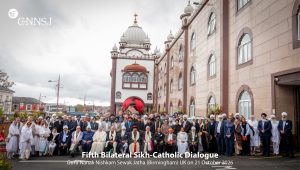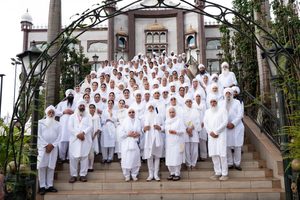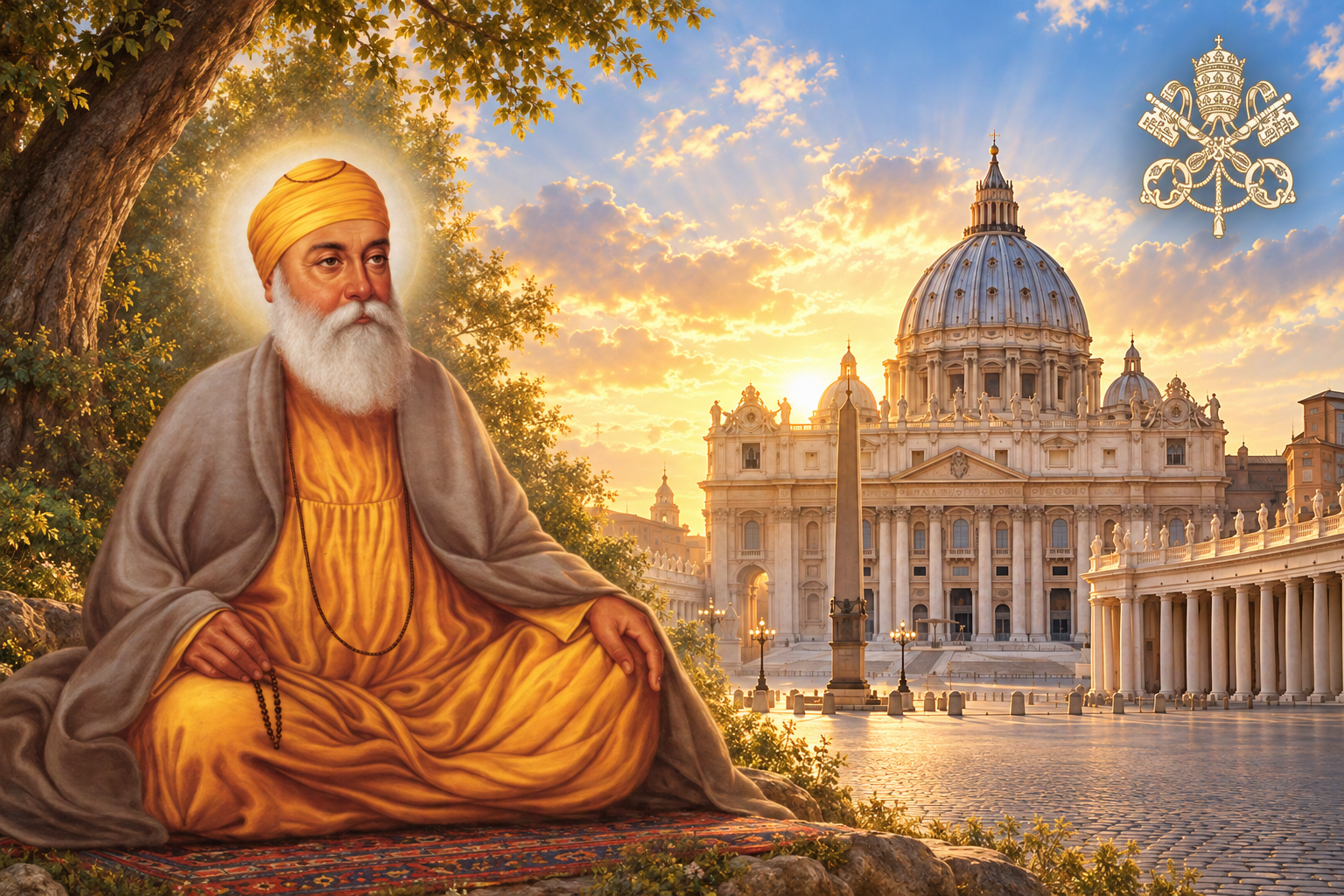
Below is a message from the Dicastery for Interreligious Dialogue, Vatican City, in honour of Guru Nanak Dev Ji’s Parkash Purab. GNNSJ recently hosted members of the Dicastery for Interreligious Dialogue, including Cardinal George Jacob Koovakad, for the fifth Sikh-Catholic Bilateral Dialogue.
Christians and Sikhs: Cultivating harmony amid diversity and differences in “the spirit of Assisi”
Dear Friends,
The Dicastery for Interreligious Dialogue sends its warm greetings and prayerful good wishes as you celebrate the birth anniversary of Sri Guru Nanak Dev Ji on 24 November this year. May this joyful occasion bring abundant blessings and happiness to you and your families and strengthen the unity and harmony of your communities!
On 27 October 2026, a commemoration was held to mark the fortieth anniversary of the historic gathering for peace in Assisi in 1986, when many religious leaders from around the world joined Saint John Paul II in praying for peace. Inspired by Saint Francis of Assisi’s legacy of peace, this interreligious gathering gave powerful expression to the fraternity and unity essential to building peace. This commitment, which has since become known as “the spirit of Assisi,” has come to signify what religions and their representatives can and must do to promote harmony and peace throughout the world by fostering interreligious dialogue, solidarity and cooperation among peoples and nations. The commemoration of this historic gathering offers us an opportunity to reflect on how Christians and Sikhs can cultivate harmony amid the diversity and differences of our times, guided by “the spirit of Assisi.”
The “spirit of Assisi” represents, first and foremost, the coming together of people from different religious traditions to pray alongside one another for harmony, peace and unity among individuals and communities. Coming together in a spirit of prayer, while respecting one another’s distinct religious heritage, provides a foundation for initiatives that bear common witness to harmony.
Secondly, it denotes fraternity, fellowship and communion “born of a creative interplay of differing realities, without imposition or amalgamation, but with complete respect for their differences, in view of a serene life in common” (Pope Francis, Address at the Ecumenical and Interreligious Meeting, 3 September 2023). By building bridges in the “spirit of Assisi” with those who differ from us, we can increasingly cultivate and foster harmony in society.
Thirdly, it is reflected in the flourishing of interreligious dialogue and cooperation throughout the world over the past four decades, arguably the most significant fruit of the Assisi gathering. True progress, as Pope Leo XIV observes, always stems from “a heart open to others, an intelligence willing to listen and a will that seeks what unites rather than what separates” (Encyclical Letter Magnifica Humanitas, 15 May 2026, 15). He further observes that working together for harmony “is not merely a pragmatic choice, but a reflection of the deeper order of reality. It aligns with the very fabric of our shared existence as members of the one human family” (Message to Participants in the 8th Congress of the Leaders of World and Traditional Religions, 17-18 September 2025). Today, as intolerance, hatred and hostility among different groups and communities continue to rise, there is a growing need for believers of different religious traditions throughout the world to engage in dialogue and cooperation in the “spirit of Assisi,” fostering harmonious coexistence at every level of society.
Fourthly, it bears witness to the very nature of religion, which is to worship God and also to encourage people to follow the divinely ordained path for humanity, foster harmony among themselves, and work together to build peace in the world. Religions have an irreplaceable role to play in society, namely, to focus on God and bring people together by inviting them to show love and care for one another and for creation, to denounce evil, and to reject violence against one another. Violence in all its forms— including violence tragically committed in the name of God or religion—does not represent “the true nature of religion. It is the antithesis of religion” (Pope Benedict XVI, Address at the Meeting for Peace in Assisi, 27 October 2011). At a time when religiously motivated violence is increasing in some parts of the world, the “spirit of Assisi” urges followers of different religions to “make active nonviolence a way of life” (Pope Francis, Message for the Celebration of the Fiftieth World Day of Peace, 1 January 2017, 1) thereby helping to cultivate and sustain harmony among people.
As believers firmly rooted in our respective religious traditions—yet united by shared values, concerns and a commitment to the wellbeing of humanity—may we, Christians and Sikhs, do all that we can, both individually and collectively, to cultivate harmony in our families, communities and society at large. Inspired by “the spirit of Assisi,” may we join hands with followers of other religious traditions and all people of good will in promoting harmony in every possible way.
We wish you all a happy Guru Nanak Prakash Diwas!
Cardinal George Jacob Koovakad
Prefect
Rev. Msgr. Indunil Kodithuwakku Janakaratne Kankanamalage
Secretary
Punjabi Translation
You can download a Punjabi translation of the message here.