
SIKH
Kirtan
A voice of the Guru
In Sikh tradition, the treasury of teachings is sung through a practice known as kīrtan – a word long used in India for the singing of devotional praise.
Learn more about kirtan
The legacy of kirtan
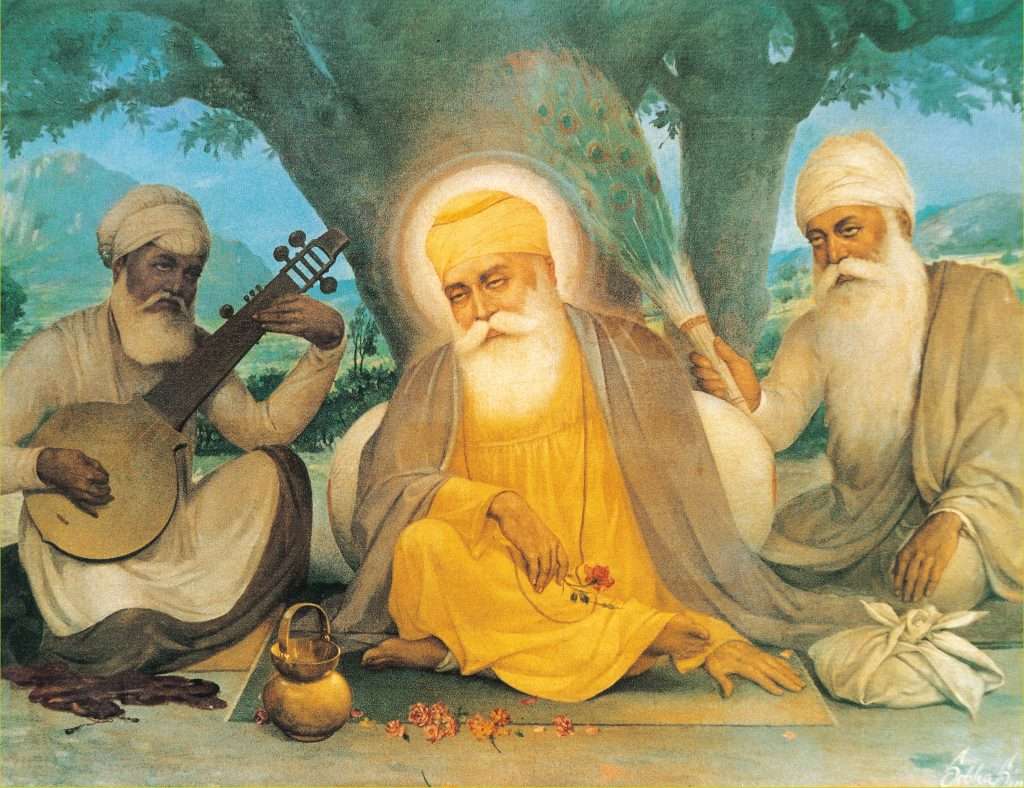
In popular paintings of Guru Nanak Dev Ji, we often see him seated next to his two lifelong friends, Bhai Bala Ji, a Hindu, and Bhai Mardana Ji, a Muslim from a family of bards and musicians.
The janam sakhi accounts narrate that whenever Guru Nanak would perceive a divine message ‘descending from the heavens’, he would ask Bhai Mardana Ji to pick up his stringed instrument, called the rabab, and play.
For Sikhs, the words uttered by Guru Nanak were ‘divinely revealed’. They are expressed poetically, with rhyme, rhythm and melody, using metaphor and poetic imagery. Often, the verses take the form of a dialogue. They address God, the human mind, as well as the diverse people Guru Nanak met during his extensive travels.
The Musical Elements of Sikh Scripture
This singing of kīrtan flows naturally from the melodic organisation of the scripture itself. Guru Arjan had structured the teachings firstly by styles of ‘rāg’ – musical frameworks with signature notes and patterns evoking different moods or states of mind and linked to different regions, seasons, or times of day.
Within each rāg section, the verses were then arranged by rhythmic style according to their poetic meter. Finally, they were ordered by composer, starting with the Sikh Gurus in consecutive order. In the verse headings, the word ‘mahalla’ plus a number distinguished which Guru – or ‘house’ of Guru Nanak’s light – the verse originated from, since all the Gurus inserted just the one name of Nanak in the closing lines of verse, in a literary convention to indicate authorship.
With their religious and linguistic diversity, passages of verse were also gathered under the umbrella heading of the Mool Mantar (or its condensed version, Ik Oang-kār Satgurprasād) to highlight an underlying unity of vision and cohesive ethos. With this, the recurring Ik Oang-kār symbol also reiterated a sense of God’s creative presence as a vibration or melody (known as nām, the Divine Name).
The power of rāg
The musical beats remind us of the rhythm of life itself, from the moment our heart starts beating to the moment its rhythm comes to an end. In the teachings, this musical dimension helps stimulate some form of inner reflection and transformation. During the time of the Gurus, kirtan was mainly performed with stringed instruments and percussion.
The Gurus underlined the importance of kirtan in the age of kaljug, where human minds are easily overshadowed by negative traits and vices. Through the art of music, not only can the sacred teachings be memorised and shared. Kirtan is also valued as the means through which their message can sublimely penetrate and transform the human psyche. Both singing and listening to kirtan helps one to build a relationship with the teachings over a lifetime, allowing their meanings to unfold according to changing insights and life experience.
Traditional Sikh Instruments
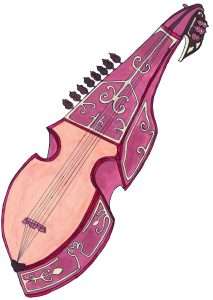
The Revered Rabab
The Oldest Companion
Step back in time to witness the birth of Gurbani sangeet with the melodious rabab. This ancient instrument, with its resonant sound and graceful structure, holds a special place in Sikh musical heritage. Originally crafted from wood and animal skin, the rabab became the perfect companion for the Sikh minstrels or kirtanee. Its long sustained sound was perfect for the kirtan which today has a closest resemblance to the dhrupad genre. Its deep, soul-stirring notes evoke a sense of devotion and tranquility.
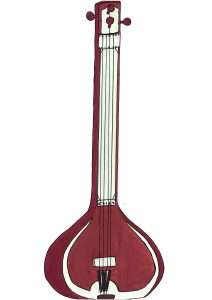
The Soothing Tanpura
The Soulful Companion
The tanpura, a stringed instrument that creates a resonant and soothing drone, creating an atmosphere conducive to focus and meditation. The tanpura provides the basis for melodic framework and acts as harmonic support to the compositions, creating a serene backdrop for the divine verses. Its gentle, continuous tones uplift the spirit and enhance the spiritual experience for both performers and listeners. The tanpura’s history can be traced back to a period even earlier than the time of the first Guru, Guru Nanak. It has been an integral accompaniment to sacred music in the Indian subcontinent since ancient times, having played a significant role in musical traditions for generations.
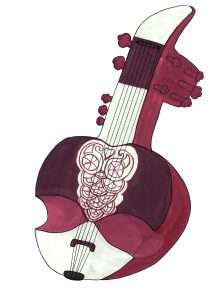
The Soulful Saranda
The Mystique
Enter the realm of enigma with the saranda, a rare and lesser-known instrument of Gurbani sangeet. Modified by the third Guru, Guru Amar Das, from its folk counterpart once again to suit it to the needs of Gurbani sangeet. Its resonating strings produce a hauntingly beautiful sound that lingers in the hearts of the listeners. The saranda was traditionally played by the celebrated ragis (an expert in the raag form of kirtan) and rababis (an expert in playing the rabab), and also the fifth Guru, Guru Arjan.
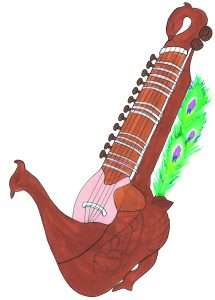
The Majestic Taus
The Royal Instrument
Introducing the taus, an instrument as majestic as its name suggests. Created by the sixth Guru, Guru Hargobind Sahib, the taus holds a distinct place in Sikh musical history. Its captivating design, resembling a peacock, symbolises grace, beauty and was a symbol of liberation. The taus boasts a rich, resonant tone that is often indistinguishable from the human voice, transporting listeners to a realm of spiritual bliss.
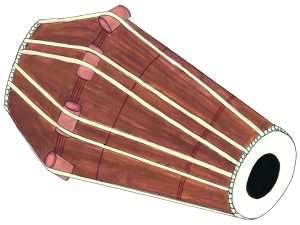
The Primordial Pakhawaj
The Divine Pulse
Discover the divine pulse that resonates through the essence of Gurbani sangeet with the pakhawaj. This traditional Indian barrel drum holds immense significance in the Sikh musical tradition being used from the time of Guru Nanak onwards and was originally made from clay and animal skin.
The pakhawaj adds depth and texture to the renditions, infusing the melodies with an earthy, soulful charm. As the heartbeat of the music, the rhythmic patterns created by the pakhawaj immerse the listeners in a meditative experience of devotion and bliss. The pakhawaj was also notably played by the ninth Guru, Guru Tegh Bahadur. Its roots trace even further back, with some sources claiming it to be the creation, in Hindu tradition, of Lord Brahma.
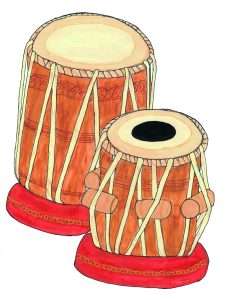
The Harmonious Jori
The Rhythmic Heartbeat
Experience the rhythmic heartbeat of Gurbani sangeet with the jori, a percussive instrument that breathes life into the melodic compositions. Consisting of two drums, the jori embodies the synergy between melody and rhythm. Played with remarkable dexterity and precision, this instrument sets the pace and captures the attention of the listeners. Explore the intricate interplay of beats and notes created by the skillful hands of the jori players.
The Guru's Soundtrack
ਨਾਨਕ ਨਾਮੁ ਮਿਲੈ ਤਾਂ ਜੀਵਾਂ ਤਨੁ ਮਨੁ ਥੀਵੈ ਹਰਿਆ ॥
Says Nanak, blessed with the Divine Name,
I learn to truly live,
And the mind and body become revitalised
In spiritual greenery.
– Guru Arjan Dev Ji, Sri Guru Granth Sahib, ang 1429
These musical dimensions shed further light on why the scripture is sensed to be a ‘Living Guru’. When spoken or sung, the verses echo the voice of the Guru and, through their rhythms, the teachings pulse to life. Kīrtan then enhances these lyrical aspects, by using the voice and instruments for melody, alongside rhythmic percussion.
Through diverse melodic forms, a particular tone or atmosphere is introduced. This could be to foster contemplation and discernment or hope and rejuvenation, to project life’s depth and magnificence or to identify a sadness of separation from God, leading to the joy of union (as reflected in the names of each rāg, such as Rāg Gound and Rāg Vadhans, Rāg Āsā and Rāg Basant, or Sirī Rāg and Rāg Suhī).
By stimulating spiritual growth, the Guru’s teachings are likened to life-giving water and oxygen, as echoed in terms like amrit, the sweet elixir that quenches the soul’s thirst, and in concepts of the Guru as pavan or ‘air’, reviving and sustaining our spiritual wellbeing.
A musical translation
In the digital age, a stream of constant messaging keeps us pulled in different directions, for better or worse. Sometimes, as we confront life’s challenges, even in our silence we can remain suspended in the soundtrack of our egoic self, which keeps us in a circle or spiral of negative thinking.
In Sikh life, kīrtan provides a form of sublime, melodic messaging. It carries the Guru’s voice of encouragement and hope, discernment and clarity, comfort and love, confidence and contentment, where the language of music provides another dimension of communication – just as the melody of a grownup’s voice communicates meanings to a child, even if the words are not yet fully understood.
Before an index of rāg forms, Sri Guru Granth Sahib closes with two final verses, where the sacred text is first pictured as a ‘thāl’, or platter; this holds the nourishment of wisdom, and the nectar of the Divine Name, to be tasted and absorbed so we may succeed in navigating and crossing life’s ocean. The very final image is one of greenery, when the mind and body become spiritually rehydrated. This reminds us, too, of the teaching early in Jap Ji Sahib – that, by embracing the three practices of ‘singing, listening and embedding love in the heart’ (sunniā, manniā, man kita bhāou – Pauri 5) we can work through all suffering and restore peace to the home of the self.