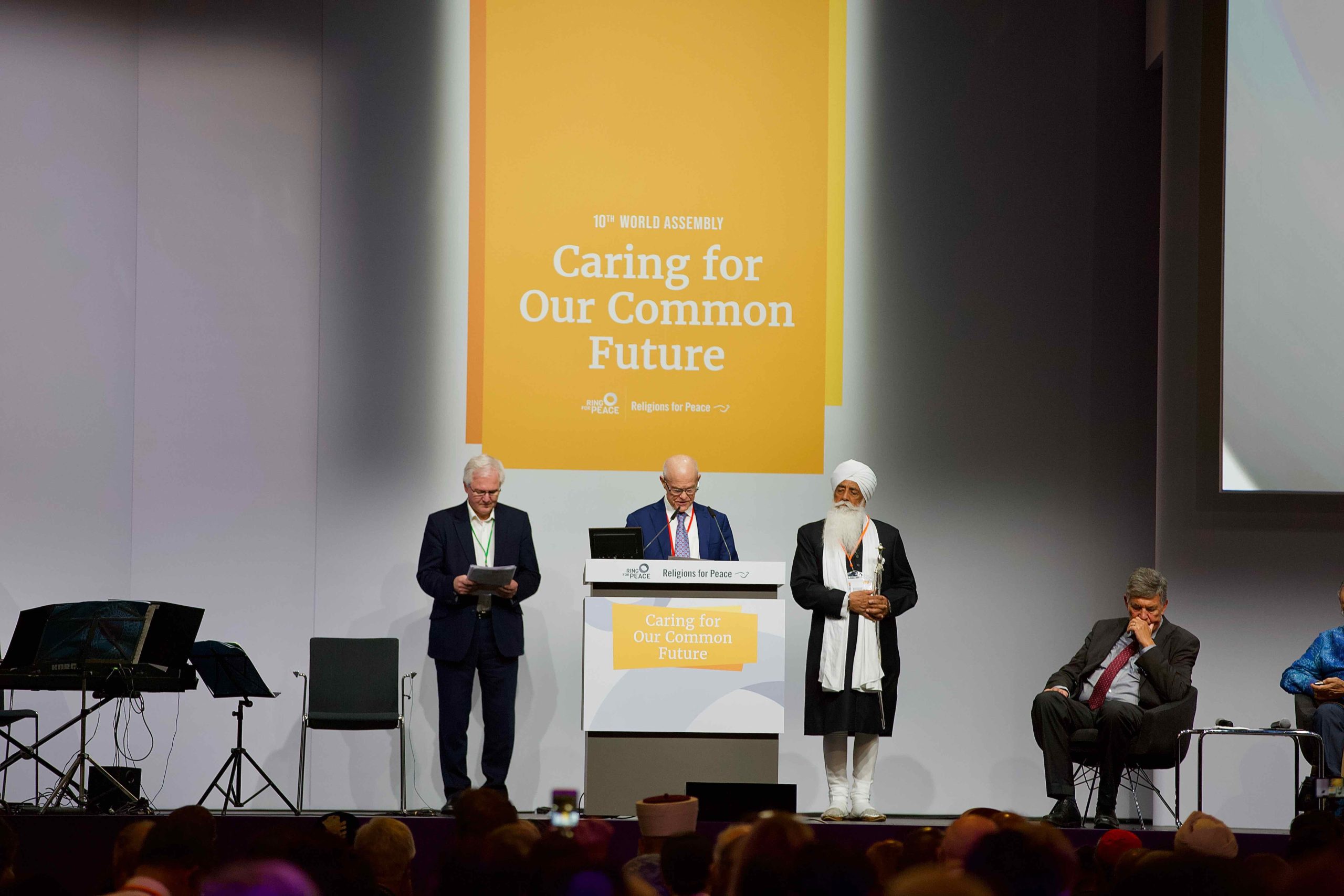
The Peace Charter for Forgiveness and Reconciliation was adopted by the 10th World Assembly of Religions for Peace (RfP). The World Assembly, opened by the President of Germany, Frank-Walter Steinmeier on 20 August 2019, was attended by some 900 global religious leaders and delegates. Religions for Peace International is the world’s largest and most representative coalition of religious and indigenous communities and operates in over 90 countries.
The concluding declaration of the World Assembly stated, “We are grateful for 49 years of determined focus on building peace and on speaking for those most in need. We are an alliance of care, of compassion, of love … We adopt The Peace Charter for Forgiveness and Reconciliation, convinced that transforming violent conflicts requires the healing of historical wounds and painful memories, forgiveness, and reconciliation. We commit to integrating efforts for healing into all our conflict resolution work.”
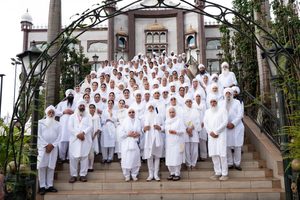
The Peace Charter was presented to the 10th World Assembly by the co-convenors Bhai Sahib Bhai Mohinder Singh Ahluwalia (Chairman of Guru Nanak Nishkam Sewak Jatha, UK, and Co-President of Religions for Peace) and Dr William F. Vendley (outgoing Secretary-General of Religions for Peace), and by the Peace Charter’s Director Dr Josef Boehle (University of Birmingham, UK). The Peace Charter’s organisational development began in 2011 and has received support from a wide range of religious, political, academic and civil society leaders.
The Guerrand-Hermes Foundation for Peace (UK), the Fetzer Institute (USA), Religions for Peace International, the Guru Nanak Nishkam Sewak Jatha (GNNSJ), UK, and the Nishkam Centre, Birmingham (UK) were amongst the early core group of supporting organisations.
During the 10th World Assembly, the delegation also attended a number of other conferences, workshops and the ‘Ring for Peace’ ceremony – where they made a commitment to safeguard out holy sites. The final declaration from the assembly made the following calls to action:
“Guided by the principles of our own religious traditions, and respectful of religious differences, we personally commit to fostering positive peace as shared well-being. We will be partners with sincere believers of other religions and all women and men of good will to:
- produce positive peace materials and workshops for multi-religious contexts with the Institute for Economics and Peace;
- develop tools and training on the positive roles of women in preventing and transforming conflicts, and on the issue of violence against them;
- acknowledge past hurts – including across religious traditions – and foster public acts of forgiveness and reconciliation;
- work for the well-being of refugees and migrants and develop programs of accompaniment and support;
- urge religious communities to invest their resources in alignment with achieving the SDGs;
- raise public awareness about deforestation with the Interfaith Rainforest Initiative and through the acceptance and promotion of the Faith for Forests Declaration, take action against climate change in general, and advocate for policies that protect the earth;
- advance reconciliation as a vital dimension of positive Peace within persons and among communities and nations as per The Peace Charter for Forgiveness and Reconciliation;
- commit to being a full-partner to support the International Campaign to Abolish Nuclear Weapons;
- forge an Alliance of Virtue based on a declaration of virtues widely shared across religious traditions and other virtue heritages.
We speak with humility, asking for support and blessings.”