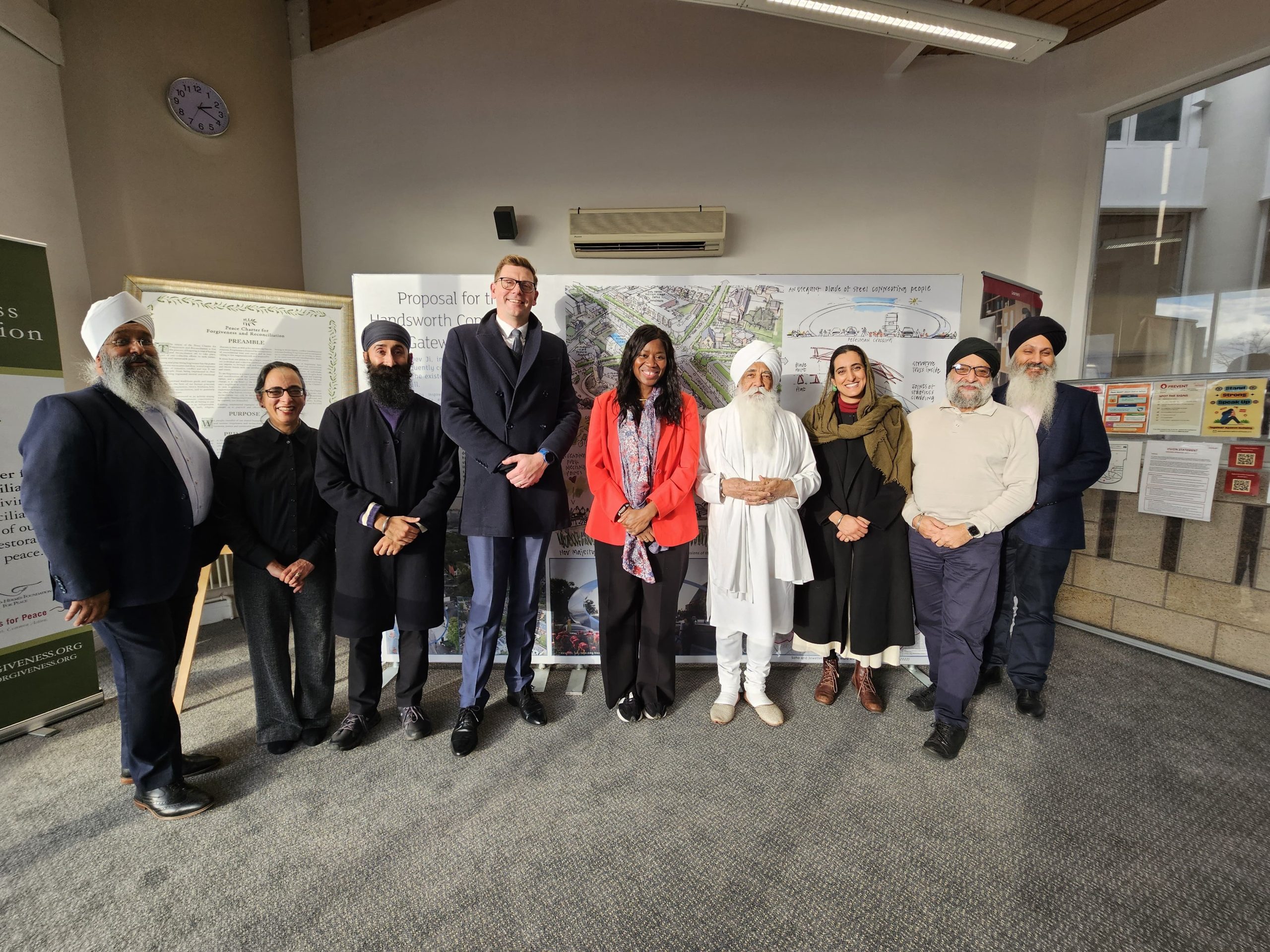
The Guru Nanak Nishkam Sewak Jatha (GNNSJ) and Nishkam campus on Soho Road, welcomed Miatta Fahnbulleh MP, Parliamentary Under-Secretary of State for Devolution, Faith and Communities. The visit provided an opportunity to demonstrate how values-led models of service and community empowerment are delivering measurable social benefit locally, regionally and internationally. A powerful case study of how faith-inspired civic action can transform a neighbourhood and strengthen national cohesion was showcased.
The Nishkam team presented a comprehensive programme of work directly supporting national priorities around devolution, regeneration, faith, community cohesion, economic growth and the ageing population. The opportunity highlighted initiatives rooted in Sikh principles of selfless service, shared humanity and civic responsibility, principles that closely align with Government ambitions for stronger communities and locally driven growth.
“The importance of strong leadership in bridging faith-based organisations and wider civil society is crucial, we must have a holistic approach consistent with current Government priorities on race equality, civic participation and building stronger, resilient communities. The case for creating a formal engagement mechanism with faith-based civic organisations to co-design local regeneration and cohesion programmes is paramount.”
Bhai Sahib Professor Mohinder Singh OBE KSG
The Minister saw pioneering housing projects that support older residents through secure, culturally appropriate accommodation, enabling them to remain close to family, faith and familiar networks. This approach reduces pressure on social care systems, strengthens intergenerational support and frees up larger homes for families. Plans for a second phase of sheltered elderly accommodation demonstrate the organisation’s commitment to sustainable, community-driven regeneration.
GNNSJ’s wider regeneration masterplan was also discussed, including the revitalisation of high-street spaces, improving commercial frontages and transforming long-neglected areas into vibrant hubs of community life. These efforts support national objectives for Pride in Place Strategy, high-street renewal, inclusive growth and improved local environments.
The visit highlighted the phenomenal work on educational and early-years development, consistent with Government commitments to ensuring every child has the best start in life, supported by safe, high-quality learning environments.
A detailed discussion also explored the Bill House redevelopment, a unique interfaith partnership between GNNSJ and the Church of England. This project aims to transform a long-vacant and derelict building into much-needed social housing and elderly accommodation, generating economic activity while strengthening community cohesion. It stands as a model of how faith-based organisations can contribute to place-making and civic renewal.